
The Career Change Challenge
Changing careers is exciting but challenging. Your biggest obstacle? Employers assume you lack relevant experience. The truth is, you have MORE value than traditional candidates because you bring:
Your resume just needs to reframe your experience to show this value.
Step 1: Choose the Right Format
Chronological resumes hurt career changers. Use a Combination Format:
Combination Resume Structure:
- Professional Summary - Explain your transition (3 lines)
- Core Competencies - List 8-12 transferable skills relevant to new role
- Professional Experience - Reframe past roles with transferable achievements
- Education & Certifications - Highlight new certifications for your target field
Step 2: Master Transferable Skills
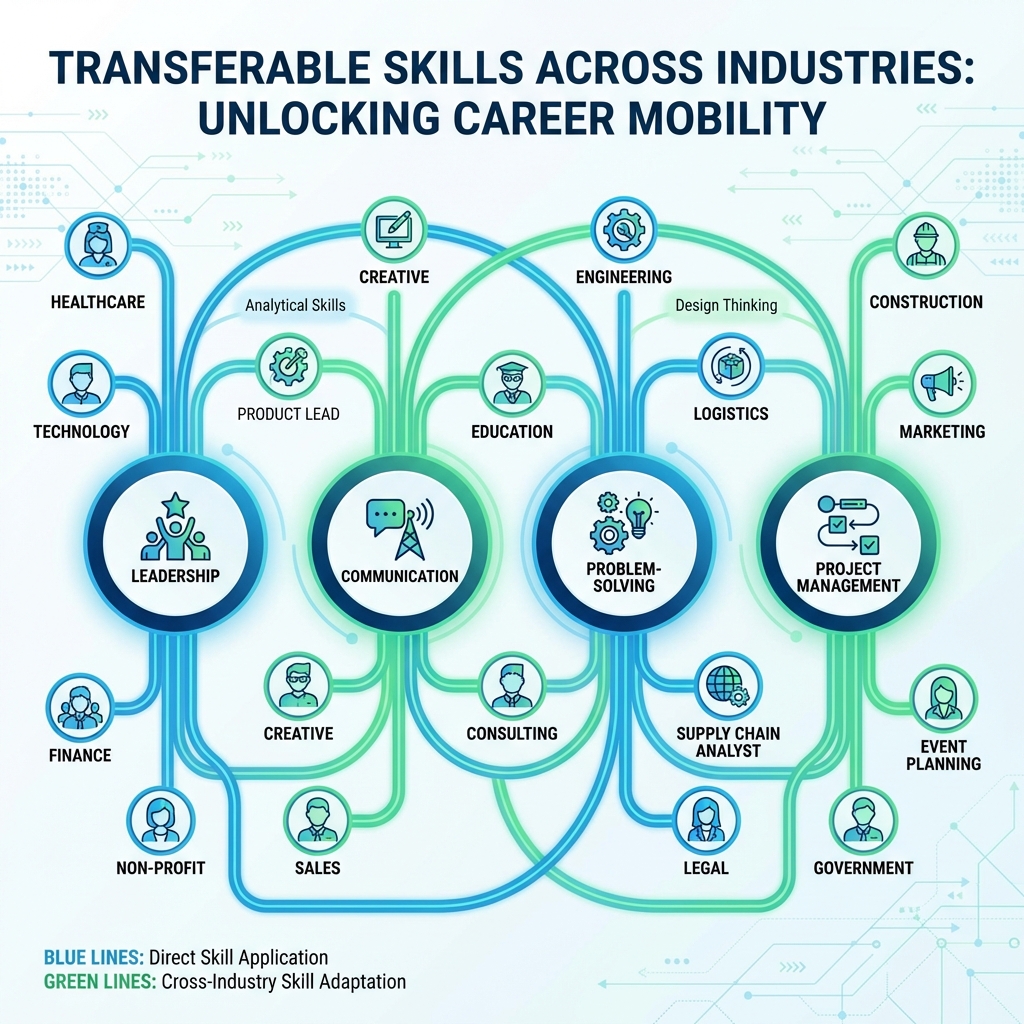
Identify skills that transfer across industries. Common high-value transferable skills:
Leadership
Team Management, Mentoring, Decision Making, Conflict Resolution
Communication
Presentations, Writing, Negotiation, Stakeholder Management
Technical
Data Analysis, Project Management, CRM Tools, Advanced Excel
Problem-Solving
Critical Thinking, Process Improvement, Troubleshooting, Innovation
Business
Budget Management, KPI Tracking, Client Relations, Strategic Planning
Soft Skills
Adaptability, Time Management, Attention to Detail, Teamwork
Step 3: Write a Powerful Summary
Your summary must address the elephant in the room: the career change. Do it confidently:
"Looking to transition from teaching to project management. I am a quick learner and eager to gain experience in a new field."
"Former educator transitioning to Project Management, bringing 8 years of proven ability to lead cross-functional teams, manage complex timelines, and communicate with diverse stakeholders. Recently earned PMP certification and managed curriculum rollout impacting 500+ students across 3 departments."
Step 4: Reframe Your Experience
Don't change what you did—change how you describe it. Focus on transferable outcomes:
Example: Teacher → Project Manager
❌ Before (Education-focused):
"Taught high school mathematics to students. Created lesson plans and graded assignments."
✅ After (Project Management-focused):
"Led cross-functional team of 5 educators to design and implement new curriculum affecting 300+ students. Managed project timeline, coordinated stakeholder feedback, and delivered results 2 weeks ahead of schedule while staying within $10K budget."
Step 5: Build New Credibility
Add credibility to your career change with these strategies:
Get Certified
Earn industry certifications (Google Certificates, AWS, PMP, HubSpot) to prove commitment
Do Side Projects
Build portfolio projects that demonstrate skills in your target field
Volunteer/Freelance
Gain real experience through volunteer work or freelance gigs in your new industry
Take Online Courses
Complete relevant courses on Coursera, Udemy, or LinkedIn Learning and list them
Frequently Asked Questions
How do I write a resume when changing careers?
Use a combination or functional resume format that emphasizes transferable skills over chronological work history. Write a strong summary statement explaining your career transition, highlight relevant transferable skills, and reframe past experiences to align with your new career goals.
What are transferable skills and how do I identify them?
Transferable skills are abilities that apply across different jobs and industries, such as leadership, communication, project management, problem-solving, and data analysis. Identify them by reviewing your past roles and listing skills that would be valuable in your target industry.
Should I address my career change in my resume?
Yes, address it briefly in your professional summary. Explain your motivation concisely and focus on how your diverse background brings unique value. Example: 'Marketing professional transitioning to UX Design, bringing 7 years of customer insight and data-driven strategy experience.'
Ready to Make Your Career Transition?
Create a career change resume that positions you as the perfect candidate for your new field.
100% Free • No Credit Card • Instant Download